It will shift the whole of Bratislava. ESET campus gets to know the details
ESET’s new headquarters is one of the most anticipated projects in Bratislava for a number of reasons. An office and research complex is to be built near the entrance to the Bratislava Forest Park near Patrónka, concentrating workplaces, development, as well as amenities in buildings of exceptional architectural level. The project is now revealing the details.
ESET is one of the most successful and internationally known Slovak companies. It is one of the leading global creators of anti-virus software and currently employs a number of highly qualified experts worldwide. Despite this, it has decided to build its headquarters in the form of a complex campus in Bratislava.
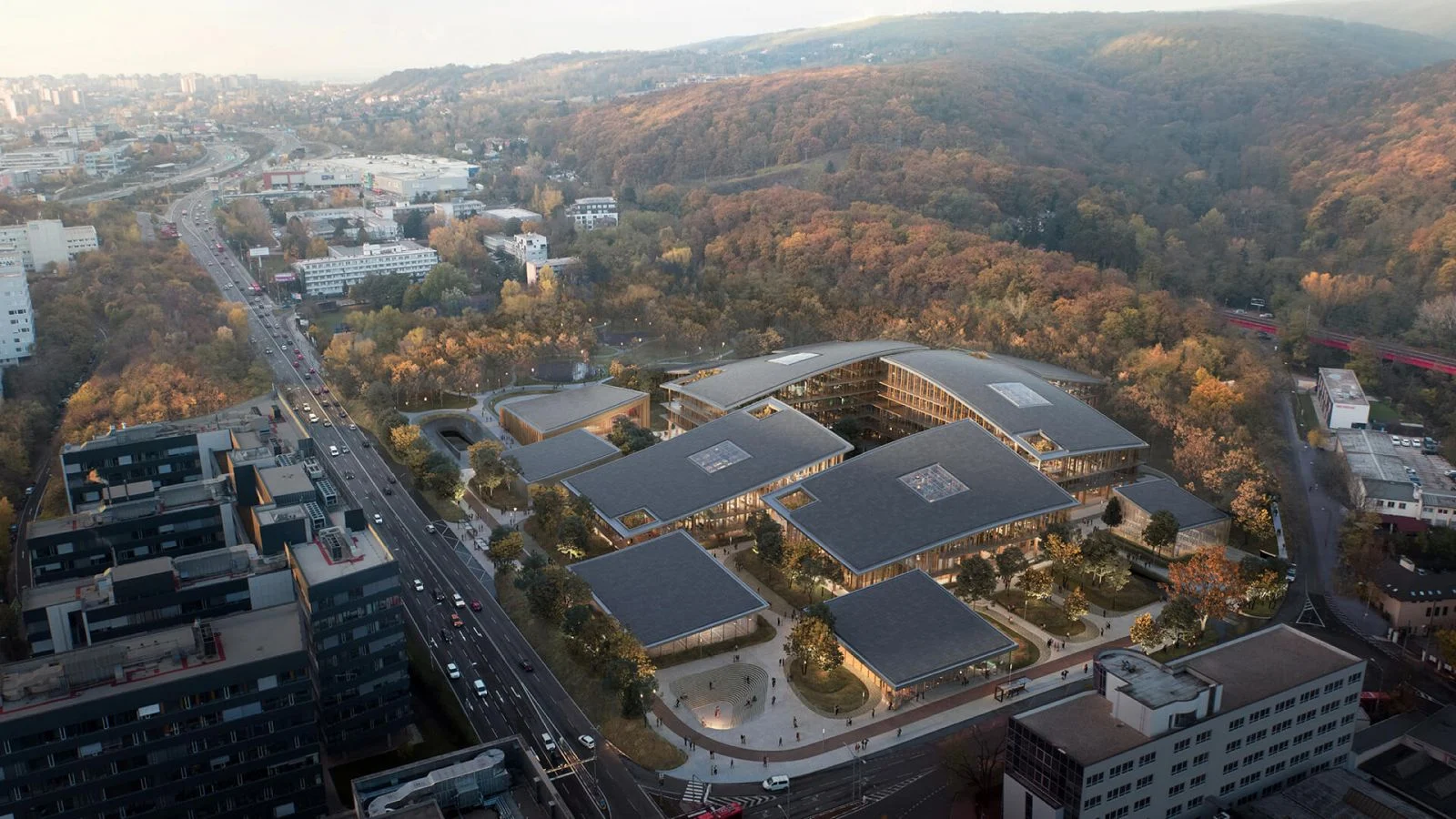
The campus is to be built on Patrónka, on the site of the former Military Hospital. The company bought the site in 2017, when it started preparations for the design of the new headquarters. It has big goals. “The ambition is to build a Silicon Valley-like Campus in the heart of Europe that will not only attract new talent, but also be able to retain them in the long term,” ESET writes. “Despite operating in the digital security sphere, the project aims to give the public a glimpse into the world of next-generation innovation. The ambition is to offer an actively vibrant place with a positive impact on its entire neighbourhood and, more broadly, the city.”
The architectural competition, to which it invited some of the world’s most prominent architectural firms, was subordinated to this plan. The finalists were three extremely famous firms: WilkinsonEyre from the UK, MVRDV from the Netherlands and BIG – Bjarke Ingels Group from Denmark. It was the latter firm that finally came up with the most convincing concept. It drew on its extensive experience, as BIG also designed the headquarters of Google, Toyota and other leading companies.
Gallery
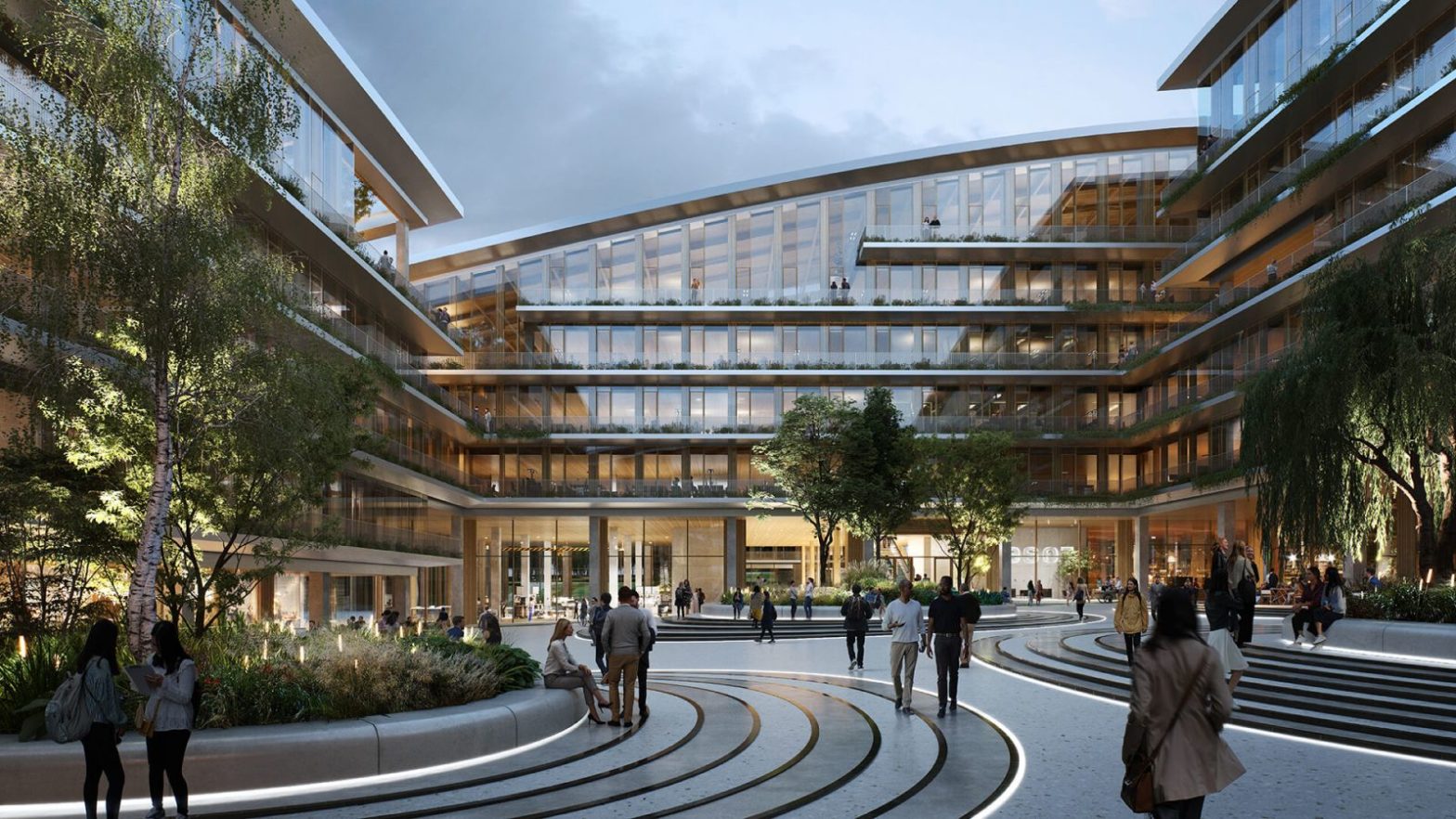
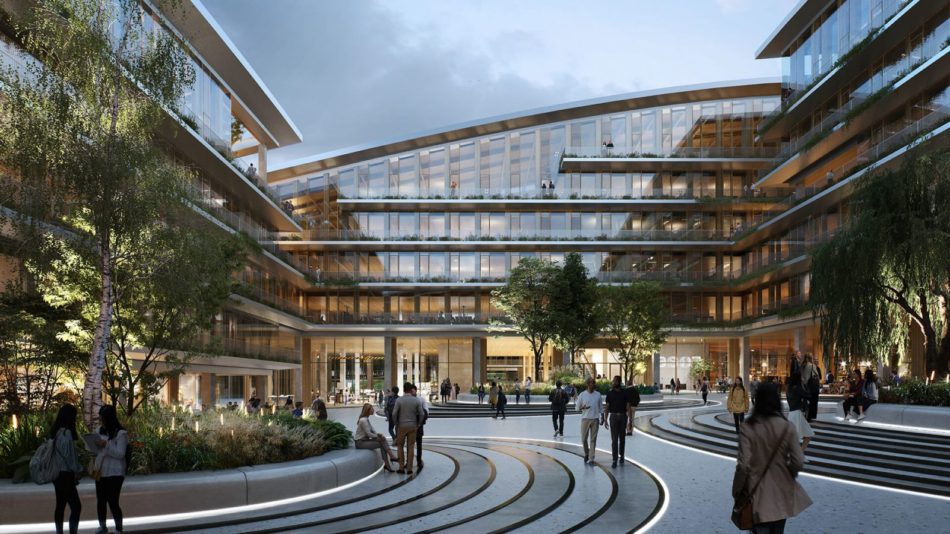
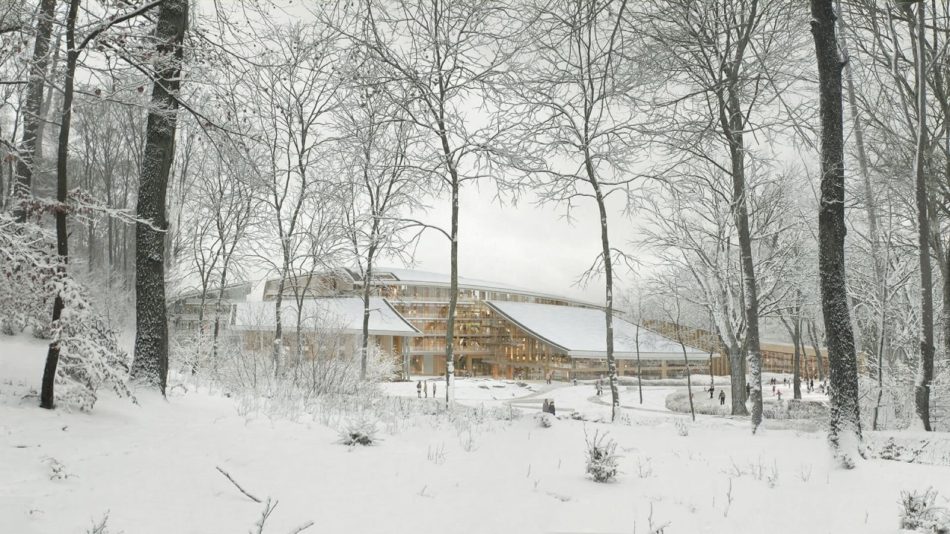
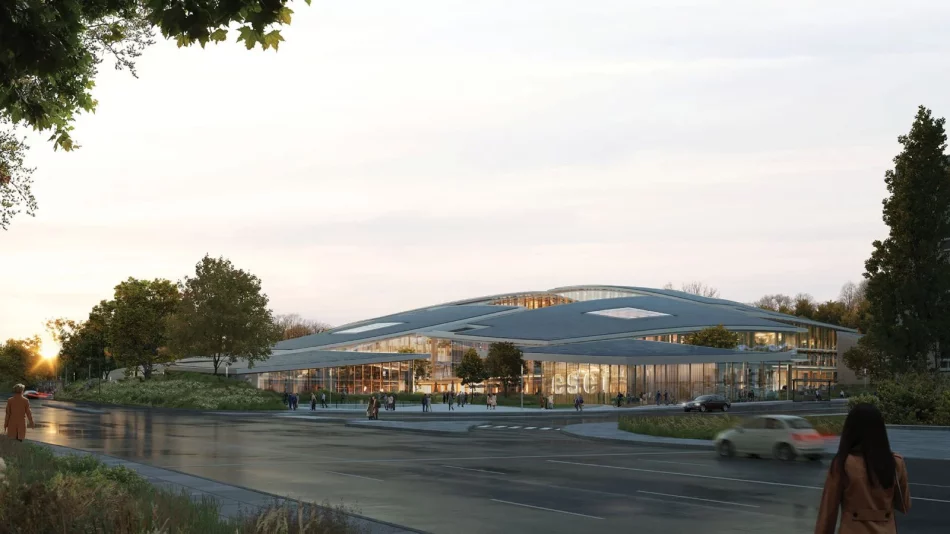
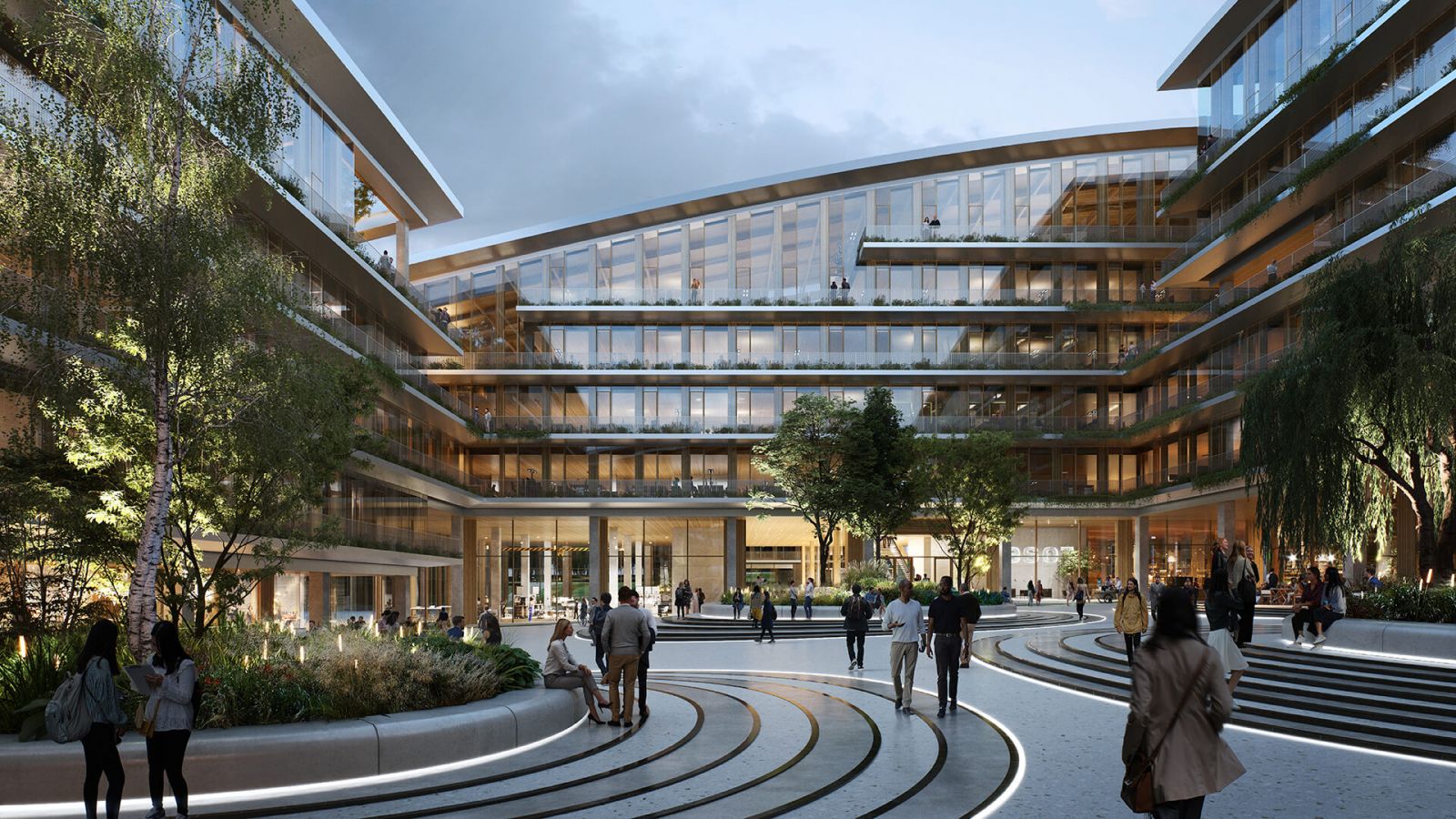
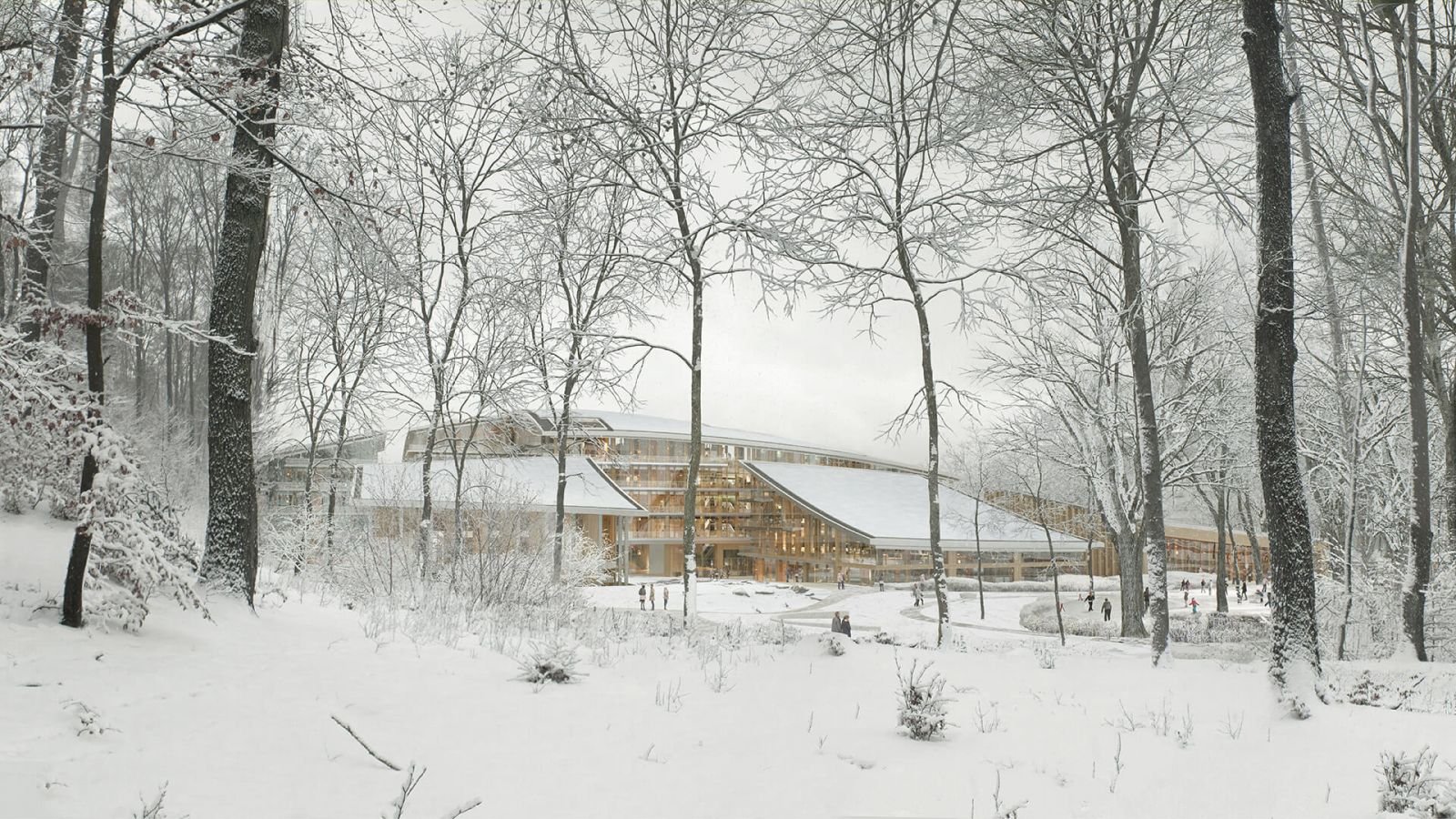
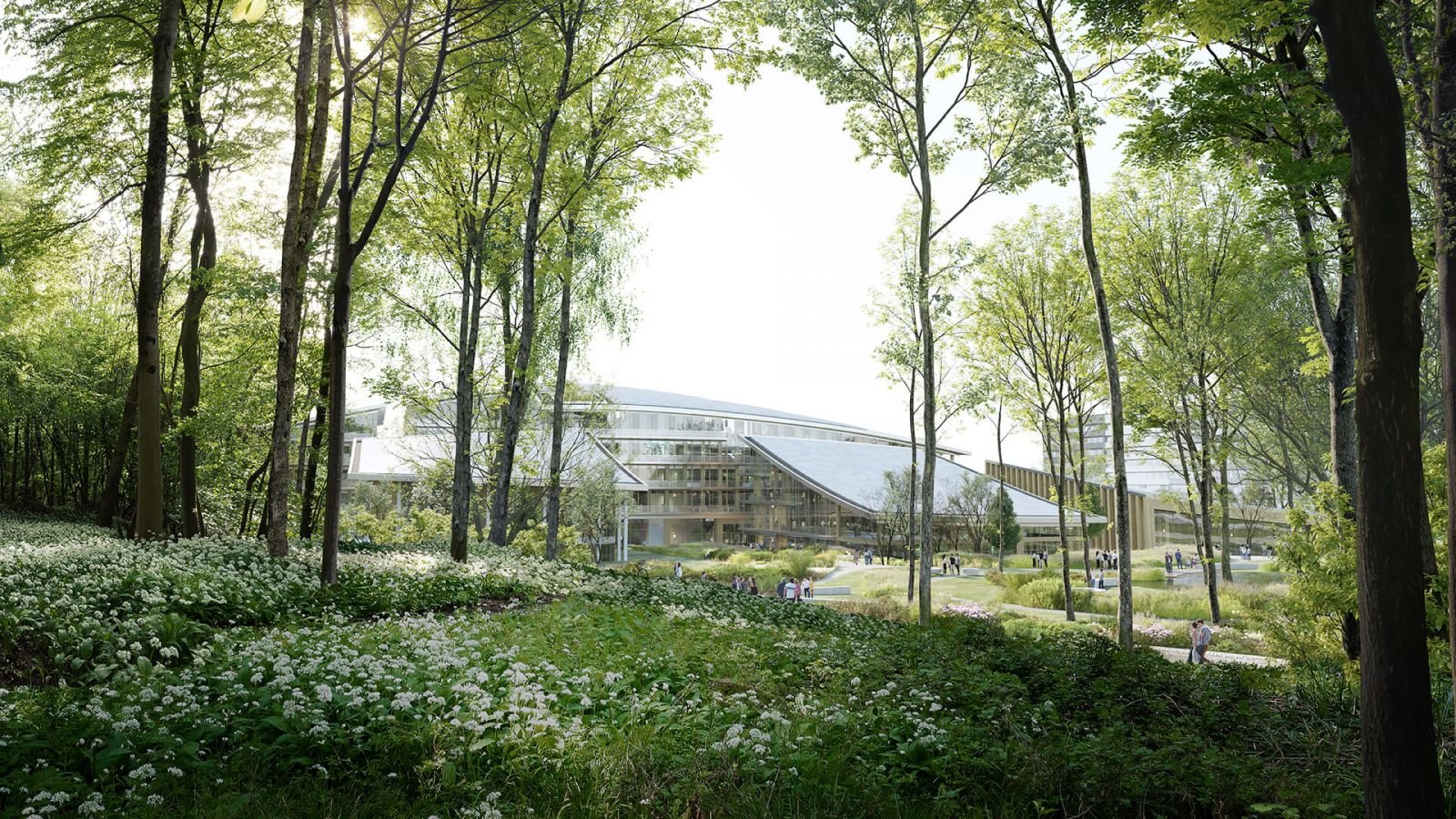
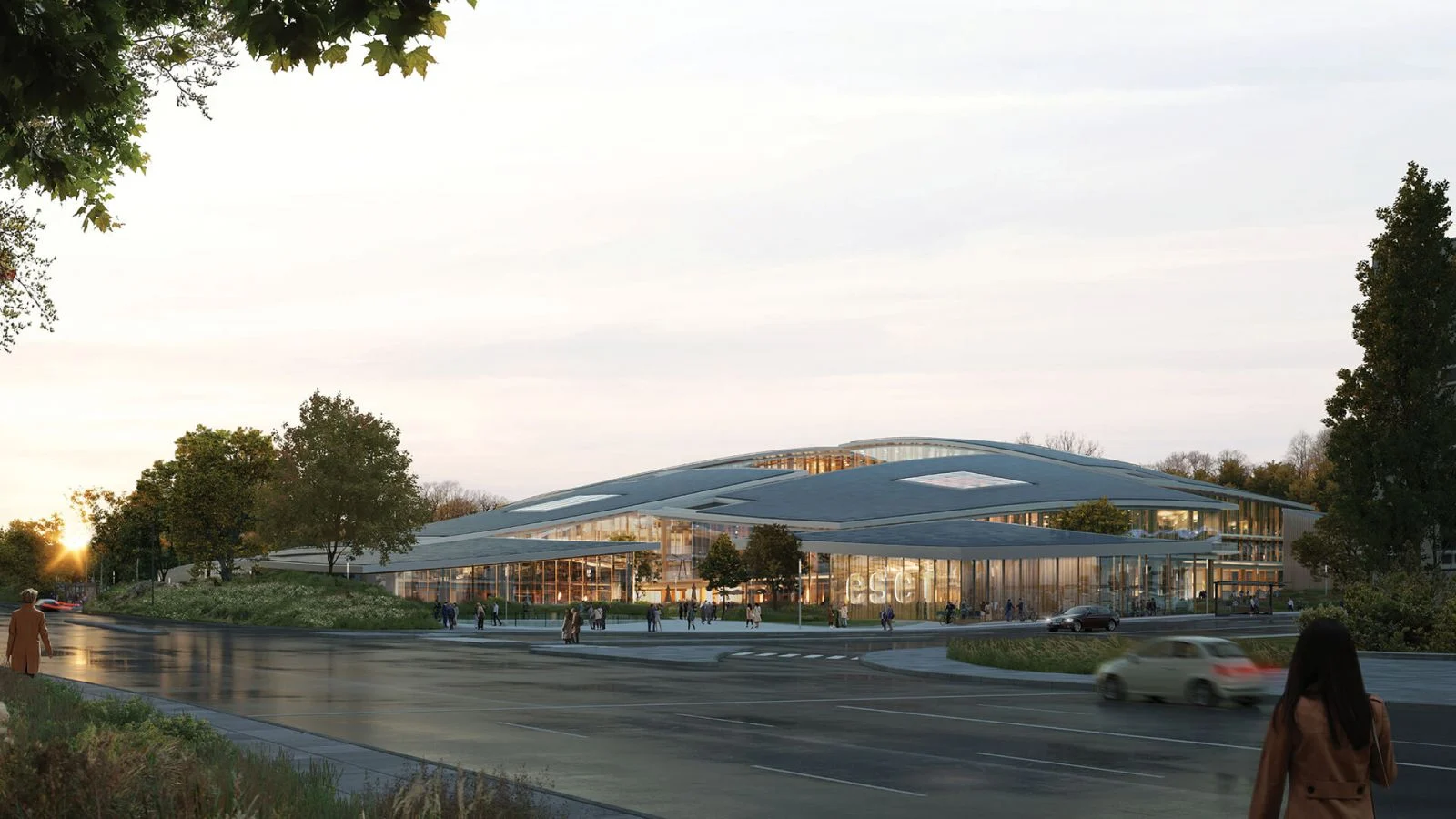
BIG has designed a massive office and research complex, but one that is intended to have a “community” feel, creating a large public space and linking the workplaces to the nearby natural environment. He therefore created a set of pavilions that are permeable, create a structure of streets and squares, have an attractive scale and provide a high level of technology. In addition to places for work, service facilities for employees and visitors are also created. The result is to be the creation of a ‘Sillicon Village’.
This vision was presented by the company at the end of 2021. Today, it adds further details as the plan finally reaches the Environmental Impact Assessment (EIA) stage. For the first time, both the situation of all the objects and the definition of their future function are being revealed.
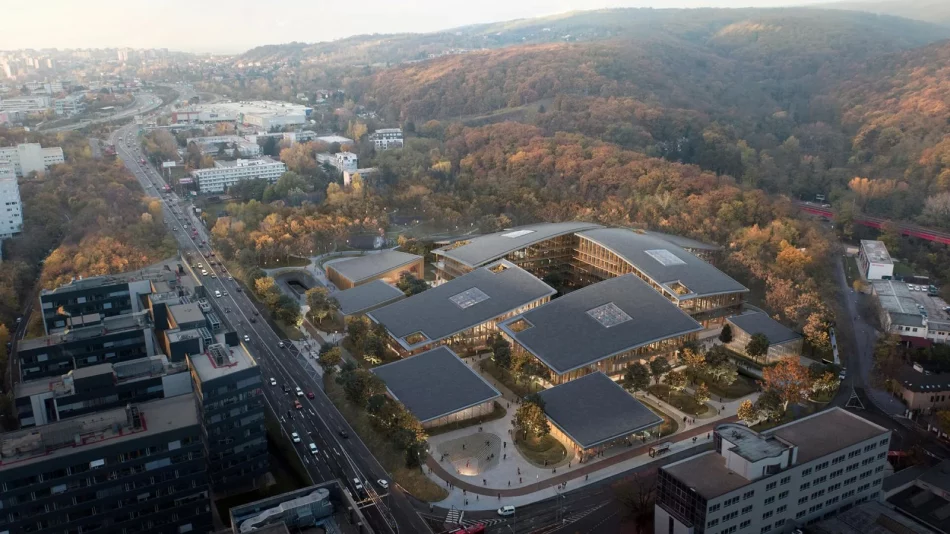
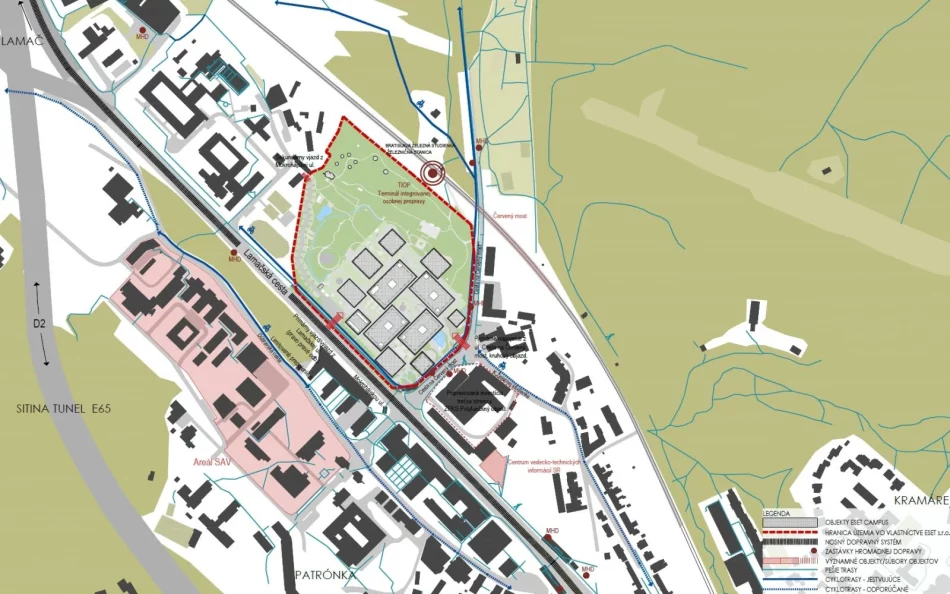
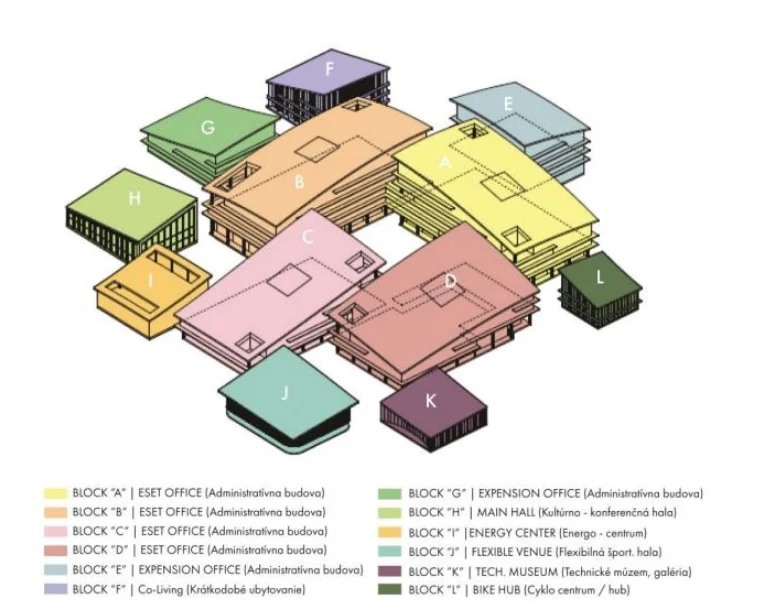
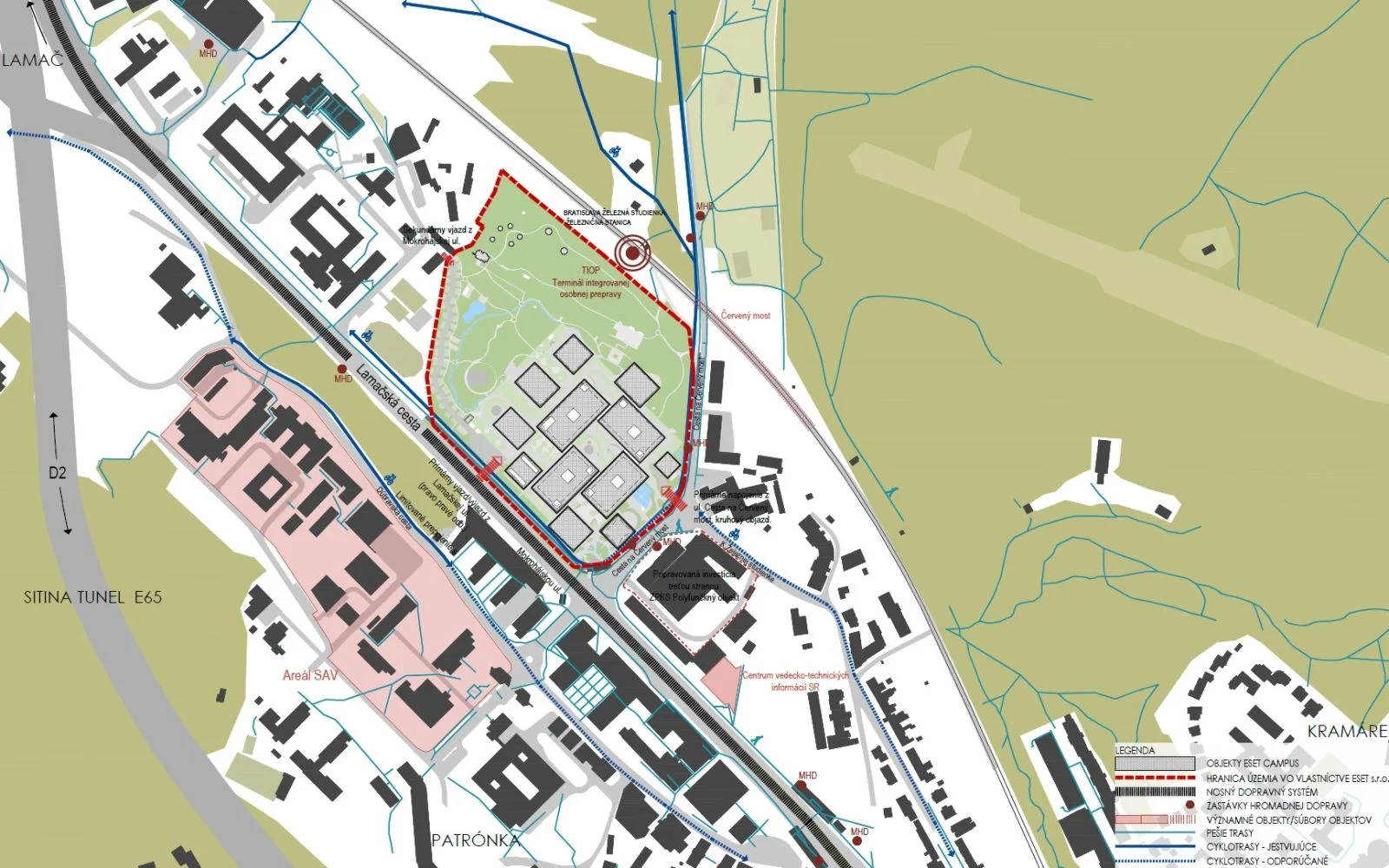
According to the documentation from local partner Pantograph, ESET wants to build a multifunctional complex consisting of 12 buildings. Four central buildings A, B, C, D will form the headquarters of ESET. The main functional content of the buildings consists of administrative and office space, the ground floor will house amenities. The gross floor area of building A should reach 12.5 thousand square meters, building B 15 thousand square meters, for buildings C and D it should be nearly 8 thousand square meters.
8 buildings E to L are planned around the perimeter of the site for future office expansion, cultural, conference, technology, non-profit and leisure space. The ground floor of the buildings will be reserved for amenities. They will be complemented by a series of pavilions with additional functions. The total gross floor area of all buildings will exceed 60 thousand square metres, the usable area of catering and services will reach 5.5 thousand square metres. The project includes 1,404 parking spaces, of which 1,275 are underground.
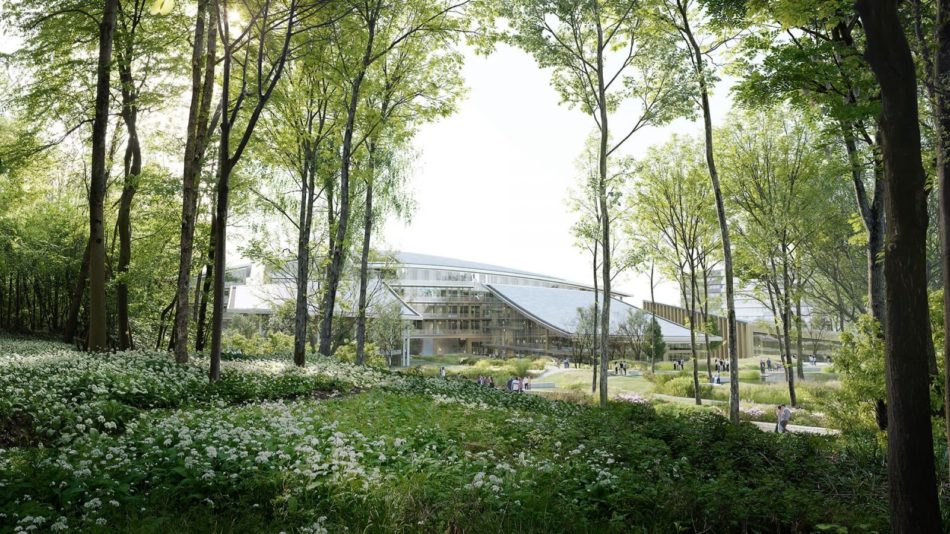
The buildings will be located mostly in the southern part of the parcel, closest to the road and with the lowest slope. The rest of the area will be dedicated to green space, of which there will be plenty (almost 45 thousand square metres). It will be used by the 1.8-2.5 thousand employees who will work on the campus.
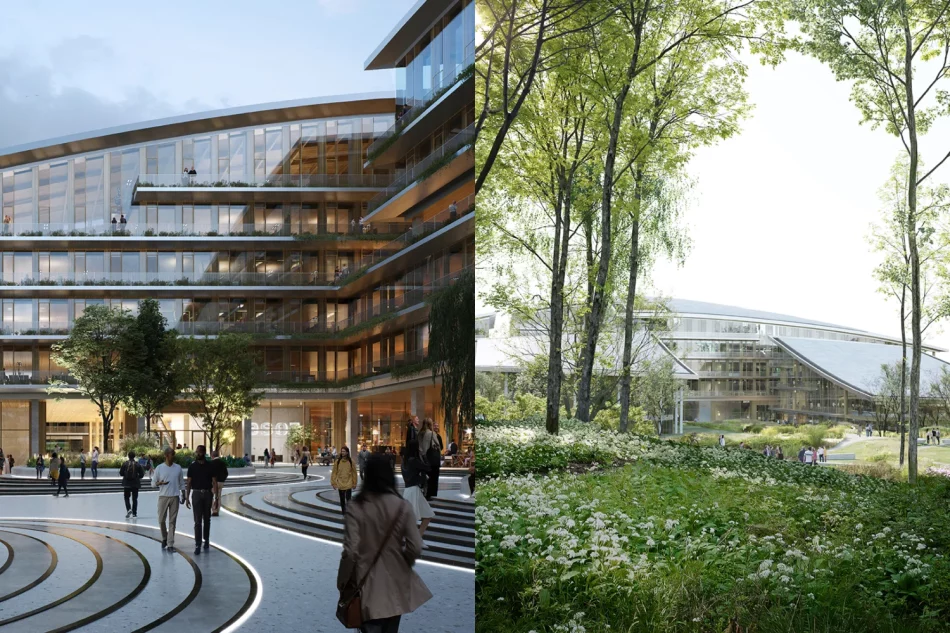
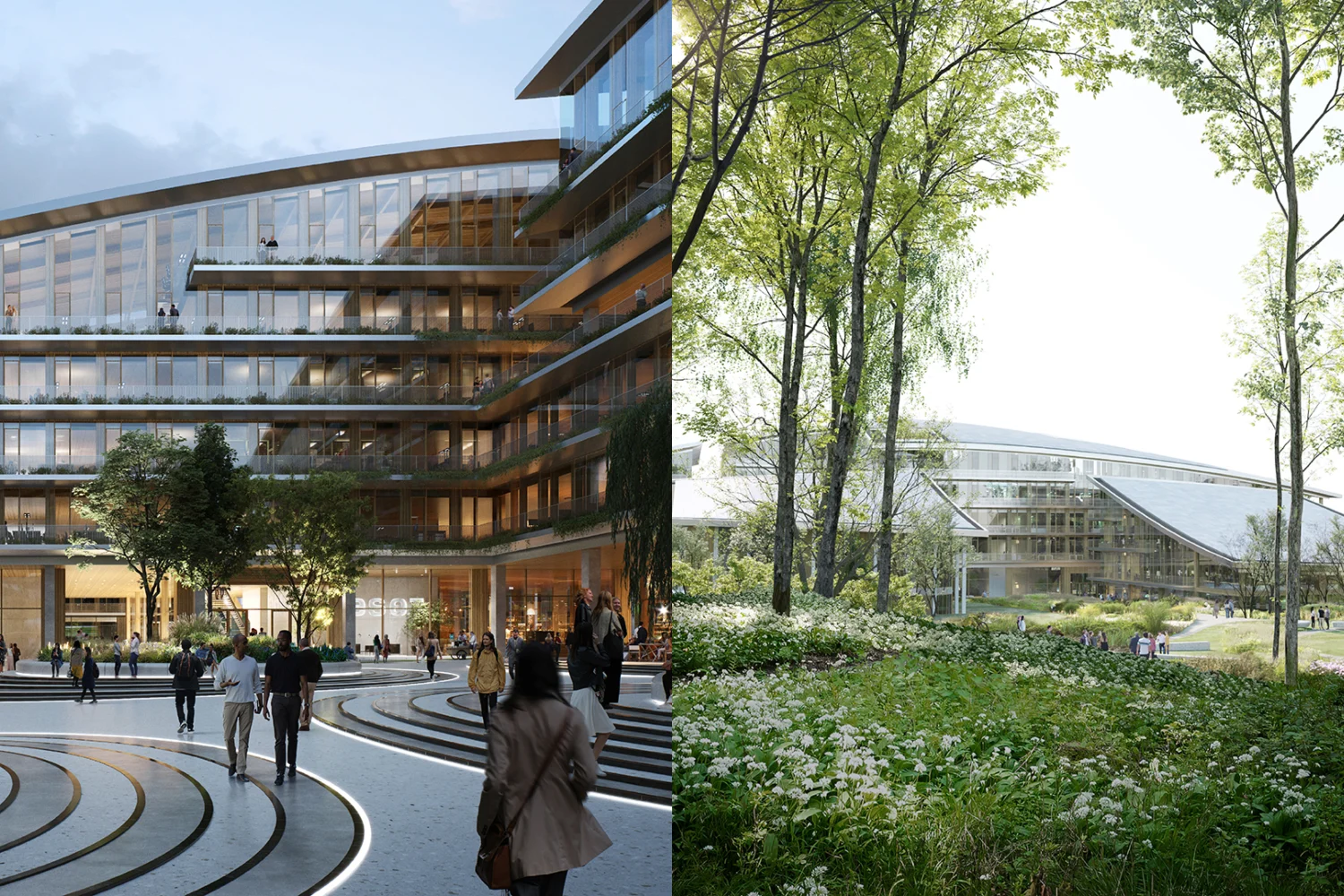
A closer look at the urbanism and the functional design of individual buildings shows how the project will be absolutely exceptional in the Bratislava context. Blocks A-D will be in the core of the campus and will surround the central square. Each of the blocks will have a specific purpose, which will be reflected in their specific design.
For example, the six-storey building A will be focused on employee care in addition to offices. On the ground floor, there will be a fitness centre, a wellness centre, a bar, a multipurpose hall, sanitary facilities and a smaller canteen or other commercial functions. In addition to offices, the six-storey Building B will provide space for socialising, which includes a canteen, clubhouse and workshops.
The five-storey Building C will provide collaborative spaces for staff, trainees and academics. Finally, the five-storey building B will house teaching spaces – a showroom, auditorium, conference rooms and rentable spaces – in addition to offices. The main reception will also be located here, and the block will be directly accessible from the Road to the Red Bridge, where the public space is also oriented in relation to public transport.
For the other buildings, the investor thought about employees, future development and the public. For example, Block E with five floors will be built as an office building for cooperating companies, but in the future ESET’s premises may be expanded here. The same applies to the four-storey block G. In the four-storey block F, there will be living quarters in the form of coliving rooms for short stays for foreign interns or collaborators.
From the public’s point of view, the two-storey block H is interesting, where there will be an event hall, serving not only the internal needs of ESET, but also the public and events organized for the purpose of technical conferences or cultural program. Block J, on the other hand, will be a multifunctional hall for events, events and sports. The hall will be conceived as an indoor sports hall with a multi-purpose area for sports or events. The building will be used by ESET employees and the general public. Block K will house a gallery with a café, designed to educate visitors about the “digital world of ESET”, while Block L will be a bicycle hub, i.e. a large bicycle parking facility with related services.
Block I, serving as an energy centre, will be a separate building. The company wants to use renewable energy sources as much as possible, the roofs will be almost completely covered with photovoltaics and heat pumps will also be used. Blocks H and J (halls) are to be designed as timber buildings. The investor adds that he paid such attention to ecology that the price was of secondary importance. As a result, the campus should achieve carbon neutrality.
The investor’s environmental ambitions will be supported by the green space solution. The landscape design is to include a sophisticated system of retention or detention of rainwater in polders and ponds from the rainfall flowing from the foothills of the Carpathians. The water is to be reused.
The greenery on the campus is to be open to the public and will be complemented by various types of gardens, a nature park, an orchard or rain gardens and a natural pond. Rest areas, a family event space with barbecue facilities, a multi-functional playground and a natural swimming pond are proposed. There will also be benches, workout areas, a revitalized tennis court, and small solitary buildings used for independent work. There will also be a climbing wall in the steepest part of the area.
However, the most iconic public spaces will be the ESET Hub – i.e. the central square – and ESET Gateway Plaza, i.e. the entrance public space, which will also be accessed by a subway from the other side of Lamačská cesta. Additional spaces for leisure, socialising and, in theory, events will be created here.
ESET wants to invest more than 150 million euros in the project. According to the documentation, it hopes to start construction in the first quarter of 2025 and complete it in the first half of 2027.
Bratislava in ESET Campus will get a complex and unique development that has the potential to really move the whole city forward. The company employs a lot of talented people who will be even more motivated to be employed at ESET. And it doesn’t have to be just locals, but also brains from abroad. In the new complex in Patrónka, they will find working conditions comparable to the most cutting-edge campuses anywhere in the world.
The public will benefit enormously. The direct benefits will be the services that will be created with the project, complemented by amenities that can support cultural, educational or recreational activities. Indirect benefits are the implications of collaboration with the academic and business sectors, tax revenues, and impacts on the development of innovative Bratislava companies. In summary, this is a plan that will take Bratislava to the next level.
It is a pity that there are not more companies of ESET’s size and importance in Slovakia. Naturally, not only in the field of IT there are several successful companies that have an international reputation (for example Innovatrics, which is also going to build a new headquarters), but none of them has such a strength yet. It is a good example of why innovation and entrepreneurship need to be supported – because when companies start giving back, such beneficial projects can emerge.
The ESET campus will hopefully be a part of the great transformation of this part of Bratislava. Mlynská dolina concentrates a huge research and educational potential and opportunities for connecting the academic and business spheres. A major innovative corporation can be the proverbial game-changer. Eventually, not only Bratislava, but also the whole of Slovakia will benefit from its development and the transformation of the location.
SOURCE: www.yimba.sk